Michael Pollan. Penguin Press, 2026. 320 pages.
Reviewed by George W. Stickel
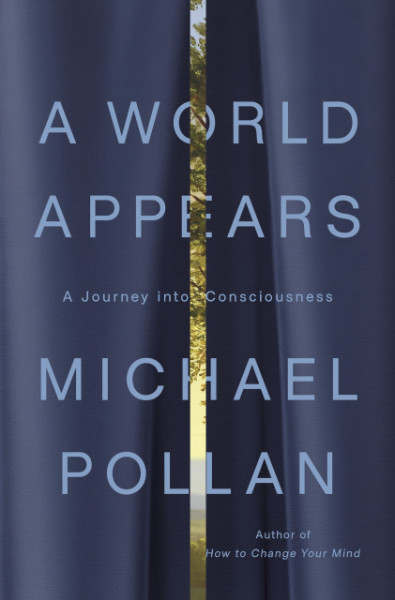
For most of his life, celebrated author Michael Pollan has been concerned with food, farming, and related topics. As his website notes, Pollan has “written books and articles about the places where the human and natural worlds intersect: on our plates, in our farms and gardens, and in our minds” (https://michaelpollan.com/about/). Six of his eight books were New York Times bestsellers, including perhaps his most well-known publication, The Omnivore’s Dilemma: A Natural History of Four Meals. This review is of Pollan’s most recent book. – Editor
I jumped at the chance to read this book after hearing its author, Michael Pollan, interviewed on Stephen Colbert’s show. Throughout my career, my academic interest has been what happens at that moment of learning and how we change as we learn. The classical American pragmatists have argued that the process of learning or habit formation begins with a provocation or a problem that awakens a consciousness within us. So, Pollan’s search for that consciousness was apropos. From my studies, that provocation stimulates a special awareness within the organism of its surroundings, as well as an internal awareness of the organism itself—e.g., fear, hunger, excitement. Those awarenesses begin a mapping of the surroundings and the self, called exteroceptive and interoceptive mappings, respectively. Only those details that are relevant to the provocation or the problem are part of the mapping. So, a shepherd missing a lamb or a student confronted with an algebra problem will not be aware of extraneous information, like their grandmother’s maiden name. Thus, consciousness becomes specific to the situation.